
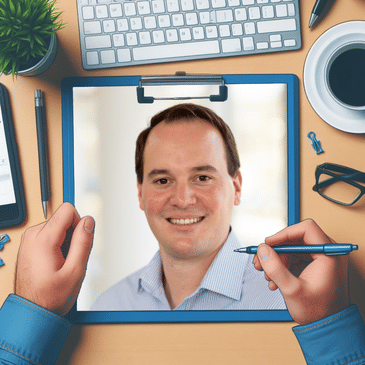
Gerald Venzl, lead product manager for Oracle databases, talks about the shift of focus away from on-premise databases towards the cloud. It's a big change for a company like Oracle, but a necessary one. Learn more about the challenges and why Oracle believes multi-cloud is the future.
If you have questions to Gerald, you can reach him here:
- LinkedIn: https://www.linkedin.com/in/geraldvenzl/
- X/Twitter: https://twitter.com/GeraldVenzl
- Github: https://github.com/gvenzl
- Medium: https://medium.com/@gvenzl
- Youtube: https://www.youtube.com/geraldonit
- Mastodon: https://mastodon.social/@gvenzl
- Blog: https://geraldonit.com/
You can find the Oracle Database team at:
- Website: https://www.oracle.com/database/technologies/
- X/Twitter: https://twitter.com/OracleDatabase
Additional show notes:
- Oracle and Microsoft Partnership: https://www.youtube.com/watch?v=ABTpRAU4HaA
The Cloud Commute Podcast is presented by simplyblock (https://www.simplyblock.io)
01:00:00
Believe it or not, database development,
01:00:02
it feels a lot like a startup.
01:00:03
There's no fixed hierarchies as
01:00:05
such. You can only do this. You
01:00:08
must only do this or anything like
01:00:09
that. You can very openly approach
01:00:11
the development leads,
01:00:12
so even up to the SVP levels. And
01:00:15
actually, just as we started now,
01:00:17
one of those guys was like,
01:00:18
"Hey, let's talk while I'm driving
01:00:19
into work." "Sorry, I'm busy right now."
01:00:28
You're listening to simplyblock's Cloud Commute Podcast,
01:00:30
your weekly 20 minute
01:00:31
podcast about cloud technologies,
01:00:33
Kubernetes, security,
01:00:34
sustainability, and more.
01:00:36
Welcome back to the next episode
01:00:38
of simpleblock's
01:00:38
Cloud Commute podcast.
01:00:40
Today I have a very special guest,
01:00:41
like always. I mean, I never have
01:00:43
non-special guests.
01:00:45
But today he's very special
01:00:47
because he's from a
01:00:48
very different background.
01:00:50
Gerald, welcome. And maybe you
01:00:53
can introduce yourself. Who are
01:00:55
you? And how did you happen
01:00:58
to be here?
01:00:59
Yeah, thank you very
01:01:00
much, Chris. Well, how I really
01:01:01
don't know, but I'm Gerald.
01:01:03
I'm a database product manager for
01:01:05
Oracle Database, working for
01:01:06
Oracle a bit over 12 years now in
01:01:09
California, originally from
01:01:11
Austria. And yeah, kind of had an
01:01:15
interesting path that set me into
01:01:17
database product management.
01:01:18
Essentially, I was a developer who
01:01:20
developed a lot
01:01:21
of PL SQL alongside
01:01:22
other programming languages,
01:01:23
building ERP systems with
01:01:25
databases in the background,
01:01:26
the Oracle database. And
01:01:27
eventually that's how I ended up
01:01:29
in product management for Oracle.
01:01:32
The how I'm here, I think you
01:01:33
found me. We have a fun
01:01:35
conversation about five
01:01:37
years ago, as we know,
01:01:38
when we met first at a conference,
01:01:41
as it so often happens. And yeah,
01:01:44
you kind of reached out and
01:01:46
think today is all about talking a
01:01:48
bit about Cloud Native, database
01:01:50
and everything else we can come
01:01:52
up with.
01:01:53
Exactly. Is it
01:01:55
five years ago that we've seen
01:01:58
last time or that we've seen at all?
01:01:59
No, that we've met five years ago.
01:02:03
Seriously?
01:02:03
Yeah.
01:02:04
Are you sure it
01:02:05
wasn't JavaOne somewhere
01:02:07
way before that? Well, we probably
01:02:08
crossed paths, right? But I think
01:02:10
it was the conference there
01:02:11
where we both had the speaker
01:02:13
dinner and got to exchange some, I
01:02:16
mean, more than just like,
01:02:17
"Hello, I'm so-and-so."
01:02:20
All right, that's fair. Well, you said you're
01:02:24
working for Oracle. I think
01:02:25
Oracle doesn't really need any
01:02:27
introduction. Probably everyone
01:02:29
listening in knows what Oracle
01:02:31
is. But maybe you said you're a
01:02:35
product manager from the database
01:02:36
department. So what is that
01:02:38
like? I mean, it's special or it's
01:02:41
different from the typical
01:02:42
audience or from the typical
01:02:44
guest that I have. So how is the
01:02:47
life of a product manager?
01:02:50
Yeah, I think so what I
01:02:52
particularly like about Oracle
01:02:55
product
01:02:56
management, or especially in
01:02:57
database, obviously different
01:02:58
lines of business and then inside
01:03:00
Oracle may operate differently.
01:03:02
It's a job with a lot of facets.
01:03:06
So the typical kind of product
01:03:07
management job, the way how it
01:03:09
was described to me was, well, you
01:03:12
gather customer requirements, you
01:03:14
bring it back to development,
01:03:17
then it gets implemented, and then
01:03:18
you kind of do go-to-market
01:03:19
campaigns. So basically, you're
01:03:21
responsible for the collateral,
01:03:23
what's the message to advocate
01:03:24
these new features to customers,
01:03:26
to the world, and then that's not
01:03:29
so true for Oracle. I think one of
01:03:32
the things that really
01:03:33
excites me in database world, it's
01:03:35
like this goes back to the late
01:03:36
70s. I mean, other than Larry,
01:03:39
not that many people are around
01:03:40
from the era anymore. But Oracle
01:03:42
back then did a lot of things
01:03:44
that were either before its time
01:03:47
or when there simply was no other
01:03:49
choice or way of doing it,
01:03:51
commensural wisdom, I would say.
01:03:53
So one of the nice things in
01:03:54
Oracle is that
01:03:55
actually the coming up
01:03:56
with new features is really a nice
01:03:58
collaboration between development
01:04:00
and product management.
01:04:01
So development just as much as
01:04:03
their own ideas of what we need to
01:04:05
do or should be doing,
01:04:06
like the PMs, and we really get
01:04:08
together and discuss it out. And
01:04:10
of course, sometimes,
01:04:11
there's features that you may or
01:04:13
may not agree with personally or
01:04:15
don't see the need for. And often,
01:04:17
actually, and much more so, you
01:04:19
get quite amazed by what we've
01:04:21
come up with. And we have a lot of
01:04:23
really smart people in the work.
01:04:26
And one thing that, yeah, not to
01:04:29
go too much into a rabbit hole,
01:04:31
but a couple of things that I
01:04:32
really like. It's like, A, believe
01:04:33
it or not, database development,
01:04:35
it feels a lot like a startup.
01:04:37
There's no fixed hierarchies as
01:04:38
such. You can only do this. You
01:04:41
must only do this or anything like
01:04:43
that. You can very openly approach
01:04:45
the development leads,
01:04:46
so even up to the SVP levels. And
01:04:48
actually, just as we started now,
01:04:51
one of those guys was like,
01:04:52
"Hey, let's talk while I'm driving
01:04:53
into work." Sorry, I'm busy right
01:04:56
now. So you have that going.
01:05:00
And then also, there's a lot of
01:05:01
the product management work is
01:05:03
very, there are a lot of
01:05:06
facets to it. So it's not just
01:05:08
define the product or anything
01:05:12
like that. That is
01:05:13
obviously part of
01:05:13
it, but also it's evangelizing as
01:05:15
I'm doing right now. I speak to
01:05:17
people on a thought leadership
01:05:20
front for data management, if you
01:05:22
like, or how to
01:05:23
organize data and so forth.
01:05:26
And as I said before, one other
01:05:28
thing that I really enjoy working
01:05:30
in a team is there's a couple of,
01:05:31
so there's actually quite a lot of
01:05:32
really smart people in the org
01:05:34
that go back to the 90s and some
01:05:36
of them even to the 80s. So I got
01:05:38
one guy who can explain exactly
01:05:40
how you would lay out some bytes
01:05:42
on disk for fastest read, etc.
01:05:44
Then this is stuff that I never
01:05:45
really touched anymore in school.
01:05:48
We were already too abstract. It's
01:05:50
like, "Yeah, yeah, yeah, whatever.
01:05:51
There's some disk and it stores
01:05:52
some stuff." But you get still
01:05:55
these low level guys and some of
01:05:56
them, one of them is like, "Yeah,
01:05:59
helped on the C compiler back then
01:06:01
with Kernighan." It's like there
01:06:02
was one of the
01:06:03
guys but was involved
01:06:04
in it. And so anyway, as you know
01:06:07
in the industry, people go around
01:06:08
quite a bit. And so that has a lot
01:06:11
going there. But yeah.
01:06:15
So from the other perspective, I
01:06:17
mean, Oracle is known for big
01:06:20
database servers. I think everyone
01:06:21
remembers the database clusters.
01:06:24
These days, it's mostly like
01:06:27
SUN Sparc, I guess. But there's
01:06:30
also the Oracle Cloud and the
01:06:32
database in the cloud. So how does
01:06:37
that play into each other?
01:06:39
Oh, yeah. Now things have changed
01:06:42
drastically. I mean, traditionally
01:06:43
starting a database software in
01:06:47
the good old 80s where you didn't
01:06:50
even have terminal server or
01:06:51
whatever, a client server. So the
01:06:53
first version is apparently a
01:06:55
terminal based or
01:06:56
something like that.
01:06:56
It's like, again, I never saw
01:06:58
this. You're like, "Yeah, that was
01:06:59
a big client server push." And
01:07:01
obviously now there's a big push
01:07:03
into what's cloud and a lot of
01:07:04
cloud is means really distributed
01:07:06
systems. And so how does it play
01:07:11
into each other? So all the
01:07:12
database cloud
01:07:13
services in Oracle Cloud,
01:07:15
all the Oracle database cloud
01:07:16
services are owned by us in
01:07:18
development as well.
01:07:19
So we have gone into
01:07:20
this mode of building cloud
01:07:22
services for Oracle database. And
01:07:26
of course, that's
01:07:26
really nice because
01:07:27
that gives us this kind of
01:07:30
visibility to the requirements of
01:07:32
distributed storage or distributed
01:07:33
workloads and that in turn feeds
01:07:37
back into the product. So for
01:07:38
example, we are still one of the
01:07:41
very few relational databases that
01:07:43
offers you sharding on a
01:07:45
relational model,
01:07:46
which is, of course,
01:07:47
I mean, to me, of course, much
01:07:48
harder than a self-contained
01:07:51
hierarchical model such as JSON,
01:07:52
which you can shard way nicer. But
01:07:55
once you actually split up your
01:07:56
data across a bunch of
01:07:57
different tables and have
01:07:58
relations between those, sharding
01:08:00
becomes quite more complicated.
01:08:02
And then of course, it's like we
01:08:04
have a lot of database know-how,
01:08:07
but that's not to neglect it.
01:08:08
We also got MySQL, they do also
01:08:10
their thing with good
01:08:11
collaboration going on with them.
01:08:12
So we have sort of quite a good, I
01:08:16
want to say, brain power,
01:08:18
intellectual power in the company
01:08:20
when it comes to accessing data
01:08:23
and to writing data. You mentioned
01:08:25
Sparc there before. There's,
01:08:26
of course, a lot of that going on.
01:08:29
And quite frankly, I will say even
01:08:31
way before cloud,
01:08:33
the fact of accessing data that
01:08:35
doesn't necessarily sit in a
01:08:37
database but analyze
01:08:38
it or query it with
01:08:39
SQL. It's like you literally go
01:08:42
back like 10, 12 years ago and
01:08:45
everybody said Hadoop will kill
01:08:46
every database and big data is the
01:08:48
way forward. And I'm sure there
01:08:49
was the same thing going on
01:08:50
in the mid 2000s. I was not in the
01:08:52
industry yet. So like, yeah, this
01:08:54
notion of that you have data
01:08:55
sitting somewhere else and you
01:08:56
just want to analyze it has been
01:09:00
around for a long, long time,
01:09:01
actually much longer than people
01:09:03
see now with objects store buckets
01:09:05
and data lakes and all
01:09:06
the good stuff. So yeah.
01:09:10
So how does that look like for customers?
01:09:14
I mean, I can see that smaller
01:09:17
customers won't have an issue with
01:09:19
the cloud, but I could imagine
01:09:20
that banks or insurances or stuff
01:09:22
like that may actually have that.
01:09:26
What does the typical cloud
01:09:27
customer for Oracle look like? I
01:09:29
think it may be very different
01:09:30
from a lot of other people using
01:09:32
Postgres or something.
01:09:34
Yeah. I mean, you kind of
01:09:36
mentioned it before. I think there
01:09:38
is, are you small
01:09:39
or are you large?
01:09:40
Right. And the SMB, small, medium
01:09:43
business customers, the smaller
01:09:44
ones, obviously,
01:09:46
they're very much attracted by
01:09:48
cloud, the fact that they don't
01:09:49
have to stand up servers and the
01:09:51
data centers themselves to just
01:09:52
get their product or their
01:09:54
services to their
01:09:55
customers. Big guys
01:09:57
are much more like consolidation
01:09:58
and the biggest customers we work
01:10:01
with, it's really kind of like
01:10:03
their data center costs are
01:10:05
massive because they are massive
01:10:06
data centers. So
01:10:07
they are looking at
01:10:08
a more of a cost saving exercise.
01:10:10
Okay. If we can lift and shift
01:10:11
this all to cloud, not only can I
01:10:13
close down my data centers or
01:10:14
large portion to it, but of course
01:10:16
also most of them actually
01:10:18
re-leveraging their workforce. So
01:10:20
people, especially the ops guys
01:10:21
are always very scared of cloud or
01:10:23
often very scared of cloud that
01:10:24
will take their job away. But
01:10:26
actually most customers are just
01:10:27
thinking like, "Rather than
01:10:29
looking after the servers running
01:10:30
at this good stuff, maybe in
01:10:33
2024, we can leverage your time
01:10:35
for something that's more
01:10:37
important to the business, so more
01:10:38
tangible to the business." So
01:10:41
they're not necessarily looking so
01:10:42
much to just get
01:10:43
rid of that workforce,
01:10:44
but transforming it to take care
01:10:48
of other tasks. A couple of years
01:10:49
ago when we did a big push to
01:10:53
cloud for Oracle Database and our
01:10:55
premier database, Cloud Service
01:10:57
Autonomous Database came out,
01:11:00
there was quite a big push for the
01:11:01
DBAs to transform into something
01:11:03
more like a data governance
01:11:05
person. So like all the data
01:11:06
privacy laws have crept in quite
01:11:11
heavily in the last five to 10
01:11:13
years. I mean, they were always
01:11:14
there, but with GDPR and all these
01:11:16
sorts of laws, they are quite
01:11:18
different in what they are asking
01:11:21
from data privacy laws before. And
01:11:24
this is getting more
01:11:25
and more and more complex, quite
01:11:27
frankly. So there was obviously a
01:11:29
lot of aspects of, "Hey,
01:11:30
you are the guys who look after
01:11:32
these databases storing these
01:11:34
terabytes and terabytes of data."
01:11:36
It's like, "Now we have these
01:11:37
regulatory requirements, where
01:11:39
this needs to be stored,
01:11:40
how this needs to be accessed, et
01:11:41
cetera." And I might try to have
01:11:43
you figure that out and
01:11:44
figure out whether the backup was
01:11:46
successfully taken or something
01:11:48
like that. So you're looking
01:11:49
at that angle. But yeah, so the
01:11:52
big guys, then they, I think to
01:11:54
some extent also very quickly
01:11:57
get very concerned of whether data
01:11:58
is stored public cloud or not.
01:12:01
Oracle was actually,
01:12:04
I want to say we were either the
01:12:05
first or definitely a forerunner
01:12:07
of what we called
01:12:08
cloud customer. So basically you
01:12:12
can have an Oracle cloud at your
01:12:14
site. So you reinstall Oracle
01:12:16
cloud in your data center. So for
01:12:18
those customers who say, "This
01:12:21
data is really, really precious."
01:12:22
You always have a spectrum. It's
01:12:25
like there's a lot of data you
01:12:26
don't care, a lot of public data
01:12:27
that you may or may not store,
01:12:28
reference data and so forth, that
01:12:32
you have to have
01:12:32
for your operations.
01:12:33
And then there's actually the
01:12:34
really sensitive data, your
01:12:35
customer confidential information
01:12:37
and so forth. And so there's
01:12:38
always a spectrum of stuff that I
01:12:41
don't care can move quicker to
01:12:43
cloud or whatever. And then of
01:12:45
course, the highly confidential
01:12:47
data or competitive
01:12:48
confidential data.
01:12:49
I really don't want anybody else
01:12:51
to get a hold of this or it's not
01:12:53
allowed or regulatory.
01:12:55
Those systems then they look into
01:12:56
a similar model where they say,
01:12:58
"Well, we like this sort of
01:12:59
subscription-based model where we
01:13:02
just pay a monthly or yearly fee per
01:13:04
use and still all the
01:13:06
automation is there." It's like we
01:13:07
still don't have to have people
01:13:09
looking whether the backup
01:13:10
is successful or something. But we
01:13:12
want it in our data center. We
01:13:14
want to be full control. We want
01:13:15
to be able to basically kind of
01:13:17
pull out the cable if we have to
01:13:19
and the data resides in our data
01:13:20
center and you guys can no longer
01:13:21
access it. Sort of that sense. I
01:13:24
mean, that is
01:13:24
obviously very extreme.
01:13:26
And so this is what we call cloud
01:13:27
customers. You can have an Oracle
01:13:28
cloud environment installed
01:13:30
in your data center. Our guys will
01:13:33
go in there and set everything up
01:13:34
like it is in public cloud.
01:13:38
That is interesting. I didn't know
01:13:41
that thing existed.
01:13:42
Yeah, it's actually gotten much
01:13:44
bigger now. So just to finish up
01:13:46
on that, it's like, so now we
01:13:48
have these, I mean, even
01:13:50
governments is this next level,
01:13:51
right? So governments come back,
01:13:55
right? And they go like, "Well, we
01:13:56
are pick any country's government.
01:13:59
We're not going to store
01:14:00
our data in another country's data
01:14:02
center." So this kind of like
01:14:04
exploded into like even what
01:14:05
we call government regions. So,
01:14:07
and there's some public references
01:14:08
out there where some governments
01:14:09
actually have a government region
01:14:11
of Oracle cloud in their country.
01:14:13
But yeah, sorry, I didn't mean to.
01:14:15
No, no, no, it's all right. It's
01:14:17
all right. It's
01:14:18
about you, not about me.
01:14:21
So it's interesting. I didn't know
01:14:24
that that Oracle or Oracle Cloud at
01:14:26
customer existed.
01:14:27
Is that probably how AWS handled
01:14:30
all the like AWS or what is it
01:14:36
called Oracle at AWS or something?
01:14:39
No, so no, no, no. So AWS is
01:14:41
different. So AWS came out with
01:14:44
outposts, but that
01:14:45
was actually years
01:14:45
later when you do your research,
01:14:47
you see that Oracle had this way
01:14:48
longer. But now I think every
01:14:50
provider has some sort of like
01:14:51
cloud at customer derivative. But
01:14:55
now what, so AWS is Oracle
01:14:57
databases and what they call RDS,
01:15:00
the relational database services.
01:15:02
But I think what you're thinking
01:15:03
of is the Microsoft Azure
01:15:05
partnership that we did. So
01:15:08
there's an Oracle database at
01:15:10
Microsoft Azure.
01:15:13
And even that has a precursor to
01:15:14
it. So a couple of years ago,
01:15:16
basically Microsoft and Oracle
01:15:17
partnered up and put a fast
01:15:19
interconnect between the two
01:15:20
clouds so that you
01:15:22
kind of don't go out
01:15:23
of public net, etc. But you could
01:15:25
interconnect them from cloud data
01:15:26
center to cloud data center,
01:15:27
they were essentially co-located
01:15:29
in the same kind of data center
01:15:31
buildings. I mean,
01:15:34
factories really what they look
01:15:35
like these days. So and that's how
01:15:37
you got this fast interconnect,
01:15:39
or kind of like buildings next to
01:15:40
each other. And that was the
01:15:44
beginning of the
01:15:44
partnership. And yeah,
01:15:45
by now you actually, it was big
01:15:47
announcement that sort of
01:15:48
actually, you
01:15:49
know, Satya Nadella and
01:15:50
Larry Ellison were up in Redmond
01:15:53
at Microsoft, I want to say was
01:15:55
last fall, kind of September
01:15:57
timeframe, something like that,
01:15:59
maybe a little bit off there, but
01:16:00
around the time,
01:16:01
where they had this joint
01:16:02
announcement that yeah, you can
01:16:04
have now Oracle database in Azure.
01:16:07
But you know, the Oracle database
01:16:08
happens to still run on Oracle
01:16:10
cloud infrastructure.
01:16:11
And why this fast connect is
01:16:13
exposed to Azure. Now the
01:16:14
important thing is like,
01:16:16
the whole all the billing, all the
01:16:18
provisioning, all the
01:16:19
connectivity,
01:16:19
everything you do is going
01:16:20
through Azure. So you actually
01:16:22
don't have to know Oracle cloud,
01:16:24
what effect that runs in Oracle
01:16:26
cloud that is all taken care of.
01:16:28
And that caters to the customers,
01:16:30
we have, you know,
01:16:31
lots and lots and lots of
01:16:32
customers who have applications
01:16:33
that run on a Microsoft stack,
01:16:35
rather than pick any Windows based
01:16:37
application that are in Azure,
01:16:39
it's a natural fit, what happens
01:16:41
to have an Oracle database back
01:16:42
end. And I think that in general
01:16:44
is something that we see in the
01:16:46
industry right now that, you know,
01:16:48
these clouds in the beginning kind
01:16:52
of like became this,
01:16:53
this massive monolithic islands
01:16:55
where you can go into the cloud
01:16:57
and they provide you all these
01:16:58
services, but it was very hard to
01:16:59
actually talk to different
01:17:01
services between clouds. And our
01:17:03
founder and CTO Larry Allison
01:17:05
thinks very highly of what he calls
01:17:07
multi cloud or what we call multi
01:17:09
cloud, you know, it's like you
01:17:10
should not have to kind of put all
01:17:12
your eggs in a basket. It's
01:17:13
literally a kind of the good old
01:17:15
story of vendor lock-in again, just
01:17:17
in cloud world. So yeah, you
01:17:20
should not have to, you know, have
01:17:22
to have one cloud provider and
01:17:24
that's only it. And even there,
01:17:26
we have already seen government
01:17:28
regulations that actually say,
01:17:29
yeah, you know,
01:17:30
you have to be able
01:17:31
to run at least two clouds or
01:17:32
whatever, right? So if one cloud
01:17:34
provider goes out
01:17:34
of business or down
01:17:35
or whatever, you know, you cannot
01:17:37
completely go out of business
01:17:39
either. I mean, it's unlikely,
01:17:40
but you know how the government
01:17:42
regulations happen, right?
01:17:45
Right. So two very
01:17:47
important questions. First, super,
01:17:50
super important. How do I get an
01:17:51
interconnect to Azure data
01:17:54
centers to my home.
01:17:57
Oh, to your home. Yeah. That I don't
01:17:59
know. They are really expensive.
01:18:01
There's some big pipes.
01:18:05
But that is the important question. The
01:18:06
other one, I mean, sure, that's a
01:18:09
partnership between, you said
01:18:10
Microsoft and Oracle, so maybe I
01:18:11
was, maybe I was off, but are
01:18:13
other cloud providers on the
01:18:15
roadmap are there talks. If you, if
01:18:17
you can talk about
01:18:18
that, I know it's probably...
01:18:19
Yeah. I mean, I'm too
01:18:21
far away to know what exactly is
01:18:23
happening. I do know for a fact
01:18:25
that, I mean, we get the question
01:18:27
from customers as well all the
01:18:28
time. And, you
01:18:30
know, against common
01:18:33
belief, I want to say, it's not so
01:18:35
much us that isn't willing to play
01:18:37
ball. It's more than the
01:18:38
other cloud vendors. So, we are
01:18:41
definitely interested into
01:18:42
exposing our services, especially
01:18:44
Oracle database services on other
01:18:48
clouds and we actively pursuing
01:18:49
that. But yeah, it's like,
01:18:52
you know, it's basically needs a
01:18:54
big corporate partnership. So I
01:18:56
don't, there's many, many people
01:18:58
that look at that and want to have
01:18:59
a say in that. But I hope that in
01:19:01
a, some time we reach a point
01:19:05
where, where all of these clouds
01:19:07
perhaps become interconnected, or
01:19:10
at least it's easier, you know,
01:19:11
to exchange information. I mean,
01:19:13
even like this ingress/egress
01:19:14
thing is already
01:19:15
ridiculous, I find,
01:19:17
right? So this was another thing
01:19:18
that Oracle did from the very
01:19:19
early days. It's like we didn't
01:19:20
charge for egress, right? It's
01:19:22
like if data goes out of your
01:19:23
cloud, well, we
01:19:24
don't charge you for it.
01:19:26
And now you see other cloud
01:19:27
vendors dropping their egress
01:19:28
prices, either
01:19:29
constantly going lower and
01:19:30
lower and lower or dropping them
01:19:32
all together. But you know,
01:19:34
customer demand will push it
01:19:35
eventually, right? Right. I think
01:19:37
I think that is true. I mean, for
01:19:40
a lot of bigger companies,
01:19:41
it becomes very important to not
01:19:43
be just on a single cloud
01:19:45
provider, but to be just like
01:19:48
failure safe, fault tolerant,
01:19:50
whatever you want to call it. And
01:19:51
that means sometimes you actually
01:19:53
have to go to separate clouds, but
01:19:55
keeping state or synchronizing
01:19:57
state between those clouds is
01:19:59
yeah, as you said, it's very, very
01:20:01
expensive, or it gets very
01:20:02
expensive, very
01:20:03
fast. Let's say that
01:20:04
way. So because we're pretty
01:20:09
much running out of time already,
01:20:12
is there any secret on the
01:20:14
roadmap you really want to share?
01:20:17
Regarding cloud in general, I
01:20:20
mean, I want to,
01:20:21
you know, one thing
01:20:22
that I should, usually I will kind
01:20:24
of want to say, you know, it's
01:20:24
like, okay, Oracle database, you
01:20:26
know, a lot of people may go, you
01:20:28
know, it's like, this is old, this
01:20:30
is legacy, what can I do with it,
01:20:32
etc. So that's all not true,
01:20:34
right? We just kind of announced
01:20:35
our vector
01:20:36
support, kind of got quite
01:20:38
heavily involved with that lately.
01:20:40
So that's kind of new and
01:20:42
exciting. And you will see,
01:20:44
you'll soon see a new version of
01:20:46
Oracle database, we announced this
01:20:48
already a Cloud World, that has
01:20:49
this vector support in it. So
01:20:52
we're definitely top notch there.
01:20:55
And yeah, the, you
01:20:57
know, how do I get
01:20:58
started with Oracle database, this
01:20:59
is also something that often
01:21:00
people haven't looked for
01:21:02
a long time anymore. So these
01:21:04
days, you can get an Oracle
01:21:05
database via Docker
01:21:06
image, or you have
01:21:07
also this new database variation
01:21:10
called Oracle Database Free. So
01:21:12
you can literally just google
01:21:14
Oracle Database Free, it's kind of
01:21:15
like a successor of the good old
01:21:18
Express edition for those people
01:21:19
who happen to have heard of that,
01:21:21
but too many people didn't know
01:21:23
that Oracle Database, there
01:21:24
was a free variant of that. And so
01:21:26
that's why we literally put it in
01:21:27
a name Oracle Database Free.
01:21:29
So that's your self contained free
01:21:31
to use Oracle Database, you know,
01:21:34
it's like, has certain
01:21:35
storage restrictions, basically,
01:21:38
and then you kind of go to too big
01:21:40
as a database. And but the big
01:21:42
item is more like, it doesn't come
01:21:45
with commercial support. So you
01:21:46
can think a little bit of like in
01:21:47
the open source world of Community
01:21:49
Edition at Enterprise Edition. So
01:21:51
you know, it's like, Oracle
01:21:52
Database Free is the free thing
01:21:54
that doesn't come with support,
01:21:55
it's essentially restricts itself
01:21:57
to a certain size. And it's really
01:21:59
meant for you to tinker around,
01:22:01
develop, run small apps on,
01:22:03
etc. But yeah, just google that or
01:22:06
go to oracle.com/database/free.
01:22:09
You will find it there. And yeah,
01:22:12
just give Oracle Database a go. I
01:22:15
think you will find that we have
01:22:16
kept up with with the time. As
01:22:19
mentioned before, you know, one of
01:22:21
the very few relational databases
01:22:22
that can shard on a relational
01:22:24
model, not only on JSON or
01:22:26
whatever. So
01:22:27
certainly a lot of good
01:22:28
things in there.
01:22:30
Right. So, last question, what do you think it's like
01:22:33
the next big thing or the next
01:22:35
cool thing, or even maybe it's
01:22:37
already here.
01:22:39
I mean, I'm looking at the whole AI thing
01:22:41
that's obviously pushing heavily.
01:22:44
And I'm sort of like, I'm kind of
01:22:48
like old enough to have seen
01:22:49
some hype cycles, you know, kind
01:22:51
of completely facepalm. And I'm
01:22:54
still young enough to be very
01:22:55
excited. So somewhere on the fence
01:22:56
there to be like, yeah, so AI
01:22:58
could be the next big thing,
01:22:59
or it could just, you know, kind
01:23:02
of once everybody realizes...
01:23:03
The next not-big-thing.
01:23:06
Exactly. I think right now there's
01:23:09
nothing else on the horizon. I
01:23:10
mean, maybe there's always the
01:23:11
always something
01:23:12
coming. But I think
01:23:13
everybody's so laser focused on AI
01:23:16
right now that we probably don't
01:23:17
even care to look anywhere else.
01:23:20
So we'll see how that goes. But
01:23:23
yeah, I think, you know, there's
01:23:26
something to it. We shall see.
01:23:31
That's fair. I think that
01:23:33
is probably true as
01:23:35
well. I mean, I asked
01:23:37
a question everyone, and I always
01:23:39
would have a hard time answering
01:23:40
by myself. So I'm asking all
01:23:42
the people to get some good answer
01:23:44
if somebody asks me that someday.
01:23:45
Yes. Smart, actually.
01:23:50
I know, I know. That's what I
01:23:51
that's what I tried to be. I
01:23:53
wanted to say what I
01:23:54
am, but I'm not sure
01:23:55
I'm actually smart. All right.
01:24:00
That was a pleasure. It was it
01:24:03
was nice. Thank you very much
01:24:04
for being here. I hope to see you
01:24:08
somewhere at a conference soon again.
01:24:10
Yeah, thanks for having me.
01:24:11
It was really fun.
01:24:12
Oh no, my pleasure. And for the
01:24:15
audience, hear you
01:24:17
next week or you hear me
01:24:18
next week. Next episode, next
01:24:21
week. See you. Thanks.
01:24:24
The cloud commute podcast is sponsored by
01:24:26
simplyblock your own elastic
01:24:28
block storage engine for the cloud.
01:24:30
Get higher IOPS and low predictable
01:24:31
latency while bringing down your
01:24:33
total cost of ownership.
01:24:34
www.simplyblock.io